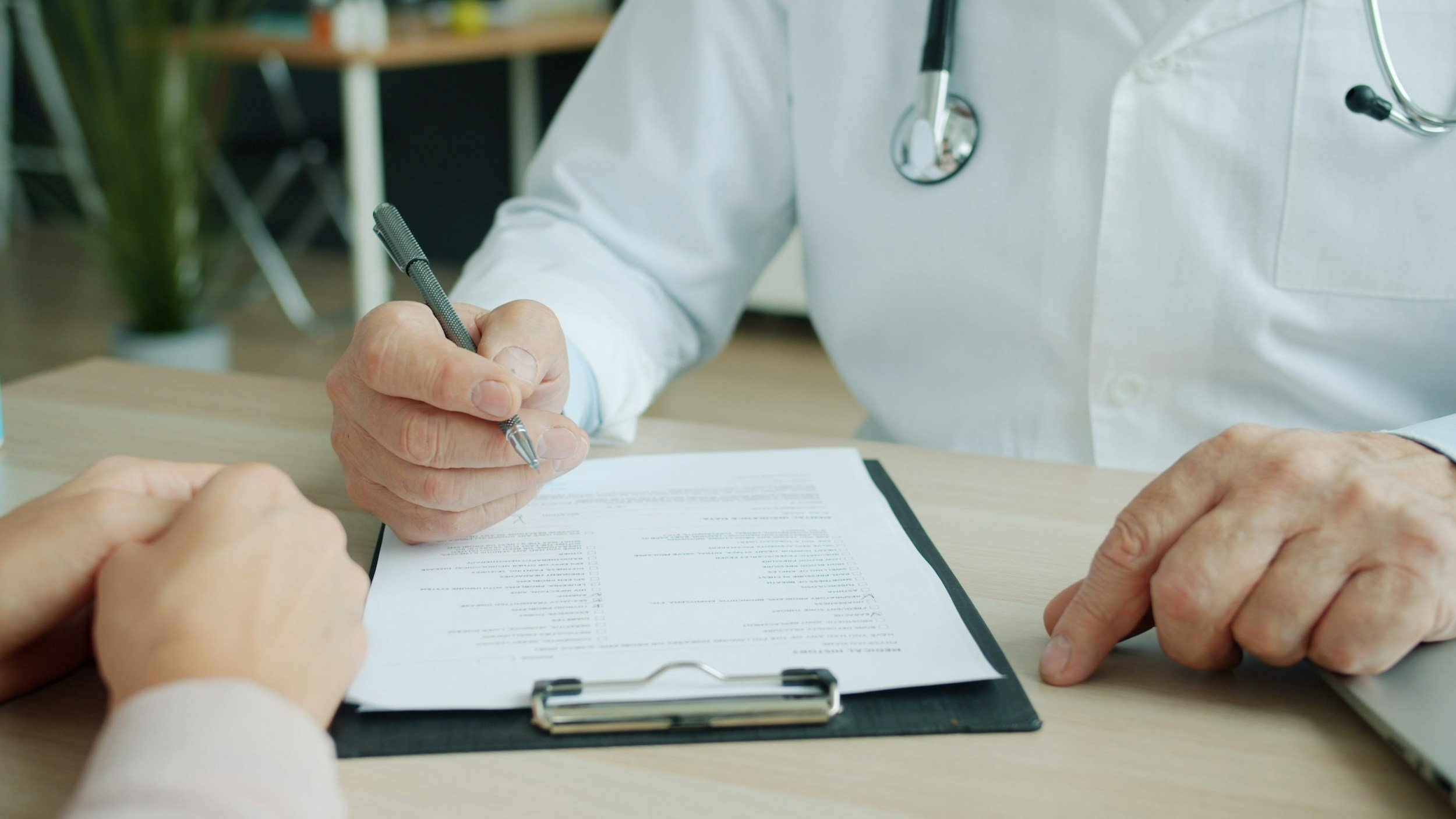
Bell's palsy follow-up brings together eye care, treatment and recovery. Contextual consultation photograph, not an image of diagnosis or a treatment result.
Call 999 for a sudden facial droop, arm weakness or speech difficulty, even if the symptoms improve. Do not assume new facial weakness is Bell's palsy or wait for an online appointment. Once stroke and other urgent causes have been excluded, early treatment and careful eye protection are central to Bell's palsy care.
What is Bell's palsy?
Bell's palsy is weakness or paralysis of the facial muscles, usually on one side, caused by a problem affecting the facial nerve. It can change your smile, blinking, speech and ability to eat or drink comfortably. The name is used when assessment has not found another condition causing the facial weakness. It is not a label that can safely be applied to any uneven smile.
Symptoms usually develop over hours or a few days. There may be difficulty closing one eye, drooping at the corner of the mouth, drooling, altered taste or discomfort around the ear. An eye may water despite being poorly protected from drying. These symptoms can be distressing, but they do not tell the whole story or reliably distinguish Bell's palsy from other causes without medical assessment.
The priorities are a safe diagnosis, prompt consideration of treatment, protection of the eye and a clear follow-up plan. Recovery often takes weeks or months rather than days. Good care supports daily function during that time and recognises when the pattern is not typical or progress needs specialist review.
When is facial weakness an emergency?
A sudden facial droop can be a sign of stroke. Call 999 if one side of the face suddenly droops, an arm becomes weak or numb, or speech becomes slurred, confused or difficult. Do not wait for all three signs to appear together. A stroke can happen at any age and urgent assessment should not be delayed because someone otherwise feels healthy.
Other possible stroke symptoms include sudden vision loss or blurring, weakness down one side, severe headache, confusion, dizziness or falling. Call 999 if stroke is suspected, including when symptoms have stopped within the last 24 hours. Do not drive yourself to A&E. The emergency call handler can advise what to do while help is arranged.
An online photograph, a video call or a home test of forehead movement cannot safely rule out stroke. Some patterns of facial movement help clinicians with diagnosis, but they should not be used as a reason to stay home with new sudden weakness. The safest route is emergency assessment first when a stroke symptom is present, not a routine private booking.
Why does the first assessment matter so much?
Bell's palsy is a diagnosis reached after considering other causes. A clinician asks about exactly when the weakness began, how it progressed and whether there are other neurological symptoms. Examination can include facial movement, eye closure, the ears, mouth and wider nervous system. The assessment should establish whether urgent hospital care or another specialist pathway is needed.
Severe ear pain, blisters around the ear or mouth, hearing loss or dizziness can change the diagnosis and treatment. A history of a tick bite, a relevant rash, recent infection, head injury or previous facial weakness is also important. Weakness affecting both sides, a slowly progressive problem or a lump in the head or neck is not a routine Bell's palsy pattern.
The aim is not to arrange every possible blood test or scan. NICE guidance does not recommend routine laboratory tests or imaging for an uncomplicated episode with a clear clinical diagnosis. Tests and referrals are selected when the history, examination or subsequent recovery suggest that more investigation is needed. A normal blood panel alone does not establish the diagnosis.
How quickly should suspected Bell's palsy be seen?
NHS advice is to seek an urgent GP appointment or NHS 111 help for symptoms of Bell's palsy. Treatment is more effective when started early, within 72 hours of symptom onset. This is a reason to obtain prompt assessment, not a reason to spend the first three days watching the symptoms or waiting for a preferred appointment.
Record the time you first noticed weakness and whether it was already present when you woke. This helps the clinician interpret the history, but uncertainty about the exact hour should not stop you seeking care. Mention any change since onset, particularly new neurological symptoms or difficulty protecting the eye. Sudden stroke symptoms still require 999 rather than NHS 111 or a routine consultation.
If more than 72 hours have passed, assessment remains important. The diagnosis may need confirmation, eye protection may still be urgent and a follow-up plan is still needed. The treatment decision is individual. It would be wrong to assume there is no useful care available simply because the early steroid-treatment window may have been missed.
What treatment can help?
For adults presenting early with Bell's palsy, a clinician may prescribe a short course of an oral corticosteroid such as prednisolone. NICE CKS recommends considering this within 72 hours. The purpose is to improve the likelihood of recovery, not to produce an immediate return of facial movement. The right treatment depends on the diagnosis and individual medical circumstances.
Steroids are prescription medicines, and a previous prescription or someone else's tablets are not a substitute for assessment. Tell the prescriber about current medicines, allergies, diabetes, pregnancy and other relevant conditions. A clinician can explain the intended course, possible side effects and any monitoring needed. Do not change an existing prescribed course on the basis of a general article.
Antiviral medicines alone are not recommended for Bell's palsy. In selected situations, a clinician may consider an antiviral alongside a corticosteroid with specialist advice, but the additional benefit is uncertain. A different diagnosis, such as Ramsay Hunt syndrome, can change the treatment approach. The important distinction is between an individual prescribing decision and a promise that everyone needs the same combination.
Why is eye protection a priority?
Blinking spreads tears across the surface of the eye. If the eyelid does not close properly, the clear front surface, the cornea, can become dry and damaged. An eye that waters is not necessarily protected: altered blinking and tear drainage can coexist with surface drying. Eye care is therefore part of treatment from the beginning, not something to add only if the eye becomes painful.
A clinician may recommend lubricating drops during the day and ointment at night. If eye closure is incomplete, correct taping at bedtime may be needed. The technique should be demonstrated or explained using reliable guidance. A patch over an eye that remains open can allow the surface to be scratched, so it should not be treated as an automatic alternative to proper closure and lubrication.
Seek immediate medical advice for eye pain, irritation, itching or a change in vision. Do not wait for the next planned review. Difficulty managing drops or keeping the eye closed also deserves prompt help. Ongoing problems may need ophthalmology assessment. The right products and method should be confirmed with the treating clinician or pharmacist rather than improvised from social-media advice.
What can make eating, speaking and daily life easier?
Weakness around the mouth may allow drinks to spill or food to collect in the cheek. Softer foods and taking time over meals may help while movement is reduced. Oral hygiene matters, including clearing food left in the weaker cheek after eating. If eating or drinking becomes difficult, the clinician can assess whether additional support is needed rather than assuming it is something to tolerate.
Speech may feel less clear because the lips are not moving normally. Allowing more time and speaking slowly can reduce pressure during conversations. However, a new or sudden speech change must not be attributed to a known facial condition without considering urgency. Call 999 if stroke is suspected, especially with new weakness, confusion or other neurological symptoms.
Changes in appearance can affect confidence, work and social life. Feeling upset or self-conscious is understandable and is a valid part of the consultation. A plan can include practical support as well as medical review. This is not a cosmetic concern to dismiss, and emotional distress does not need to be severe before it is worth discussing.
Should you exercise the weak side of the face?
More effort is not automatically better. In the early weak or floppy stage, repeatedly forcing a smile, squeezing the eye shut or copying generic facial workouts is not a proven route to faster recovery. Facial Palsy UK's current advice cautions against practising forced movements while the face is paralysed or weak. Chewing gum should not be used as a strengthening programme.
Specialist facial rehabilitation is different from unsupervised exercise. If recovery is incomplete or symptoms persist, a practitioner experienced in facial palsy may recommend a tailored approach. The appropriate timing and technique depend on the recovery pattern. NICE notes limits in the evidence for physical therapies, so it is important not to promise that a particular exercise or device will restore nerve function.
Rest, appropriate eye care and the treatment plan remain priorities. If you want advice about massage or movement, use guidance from the treating team or a recognised facial-palsy service. Do not add electrical stimulation, forceful exercise or an intensive treatment package simply because it appears active. Care should fit the stage of recovery, not the understandable wish to do more at any cost.
How long does recovery take?
Many people improve over weeks to months, and NHS information says most get better within six months. Some take longer and some have lasting weakness or other symptoms. An individual recovery time cannot be promised from the appearance of the face at one appointment. Changes may be gradual, and early treatment does not guarantee a complete recovery.
Arrange a review if symptoms are not improving after three weeks. NICE guidance also recommends considering specialist referral for incomplete recovery after three months, uncertain diagnosis, recurrent episodes or atypical features. These are review points, not instructions to wait if the eye is painful, vision changes or new neurological symptoms develop. New concerns should be assessed when they arise.
Some people develop linked or unwanted movements during recovery, known as synkinesis, or persistent watering, tightness or facial discomfort. These symptoms can need specialist assessment rather than simply more effort with exercises. The follow-up plan should address function and comfort as well as movement, including the effect on sleep, eating, work and confidence.
What can a follow-up GP review offer?
After the urgent assessment and initial treatment, a GP review can bring the recovery plan together. It can revisit eye protection, medicines, daily function and the need for referral. At The Online GP by The Wellness, an enquiry about follow-up should be clear about the diagnosis already made, when symptoms started and what care has been provided. It is not an emergency route.
Some concerns need examination of the eye, ear or nervous system in person. A remote consultation cannot replace every part of that examination or guarantee a prescription. The appropriate format depends on the concern and what has already been assessed. A useful consultation explains the limits of remote care and directs you to the right next step when examination is required.
Clients seeking a stable follow-up can share their discharge advice, prescribed medicines and any changes in symptoms through the agreed clinical process. Keep the existing care plan in place unless the responsible clinician advises a change. For sudden new facial droop, arm weakness or speech difficulty, call 999 instead of sending an enquiry or waiting for a reply.
Discuss a non-urgent follow-up after Bell's palsy assessment
Frequently asked questions
Can Bell's palsy be diagnosed from a photograph?
A photograph can show facial asymmetry but cannot establish the cause or exclude stroke. Diagnosis needs an appropriate history and examination, sometimes with further assessment. Call 999 for sudden facial droop or other stroke symptoms. Do not wait for an online image review to decide whether emergency care is needed.
Do I need treatment within 72 hours?
Early assessment matters because corticosteroid treatment is more effective when started promptly, within 72 hours. A clinician decides whether it is appropriate after assessing the diagnosis and your medical history. If that time has passed, still seek care. Eye protection, investigation of other causes and a follow-up plan remain important.
Why is my eye watering if it is also dry?
Weak blinking and altered tear drainage can cause watering while the eye surface is inadequately protected. Watering does not mean drops or other prescribed eye care are unnecessary. Seek immediate medical advice for pain, irritation or vision change. If the eyelid will not close properly, the care plan may need review.
Should everyone take an antiviral as well as steroids?
No. Antiviral treatment alone is not recommended for Bell's palsy. NICE describes uncertain additional benefit from combination treatment and advises specialist input if it is being considered. Another diagnosis, including Ramsay Hunt syndrome, may need a different approach. Do not start or share prescription medicines without an individual assessment.
When should I return to the doctor?
Seek review if there is no improvement after three weeks, or sooner if symptoms worsen, eye problems develop or the diagnosis is uncertain. Incomplete recovery after three months may need specialist review. Sudden new neurological symptoms require emergency assessment rather than waiting for a routine follow-up appointment.
Can anything guarantee that my face will recover fully?
No treatment can guarantee complete recovery. Many people improve naturally, which makes before-and-after photographs an unreliable way to judge whether an added treatment caused recovery. Early prescribed treatment, eye protection and appropriate follow-up have clearer roles than unproven promises. Persistent symptoms deserve specialist assessment and practical support, not blame for failing to exercise hard enough.
Sources
NICE CKS, Bell's palsy diagnosis
NICE CKS, Bell's palsy differential diagnosis
NICE CKS, Bell's palsy management