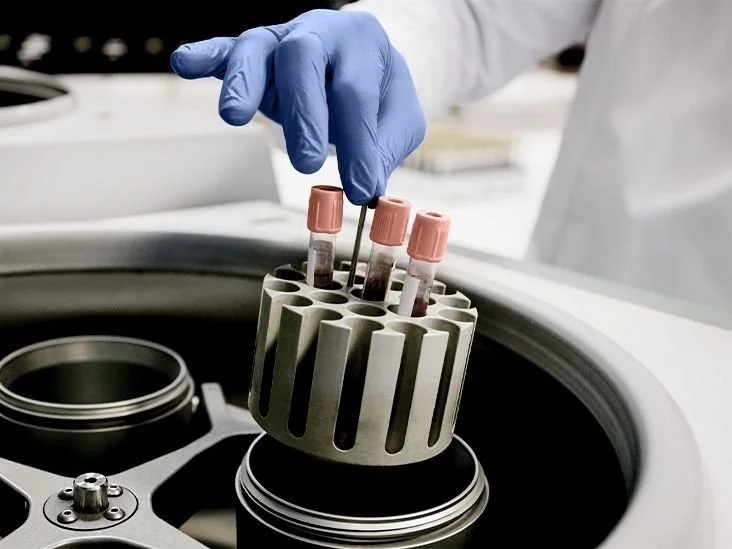
A potassium result is interpreted with symptoms, medicines and kidney function. Contextual laboratory photograph.
Low potassium on a blood test needs a clinical plan based on the result, symptoms, medicines and kidney function. Some results can be managed with monitored treatment outside hospital; severe or symptomatic hypokalaemia needs urgent care. Taking a supplement or eating more bananas is not a safe substitute for that assessment.
What does a low potassium result mean?
Potassium is a mineral involved in nerve signals, muscle function and the electrical activity of the heart. A blood test measures its concentration in the fluid part of the blood. Most potassium is inside cells, so the blood result is an important clinical measurement rather than a complete account of the body's stores or the quality of someone's diet.
Hypokalaemia means a potassium concentration below 3.5 mmol/L. Laboratories may use different reference ranges, so the report should be interpreted alongside its own range and any laboratory comment. The significance also depends on how quickly the result has changed, whether there are symptoms and whether a heart condition or another illness increases the risk.
A mildly low result in someone who feels well is different from a rapidly falling result during ongoing vomiting or diarrhoea. Equally, feeling well does not make a markedly low value safe to ignore. The useful next step is to establish the urgency and cause, then agree treatment and a repeat-test plan rather than responding to the number in isolation.
When does low potassium need urgent assessment?
NICE clinical guidance recommends immediate hospital assessment for severe hypokalaemia, below 2.5 mmol/L, and for symptomatic cases, particularly where there is a rhythm disturbance, severe weakness, paralysis or breathing impairment. A result from 2.5 to 2.9 mmol/L also needs prompt clinician review and discussion about whether hospital care is required, even without symptoms. Do not wait for a routine private appointment.
If a laboratory or clinician has told you to attend urgently, follow that advice now. Do not postpone care to arrange another test, try a dietary change or wait for an online message response. A blood test is a snapshot, and continued losses or a change in health can make an earlier result less reassuring.
Call 999 or go to A&E for palpitations that do not go away, or palpitations with chest pain, breathlessness, feeling faint or fainting. Do not drive yourself to A&E. If those symptoms have stopped, seek an urgent GP assessment or NHS 111 advice. Marked new weakness or breathing difficulty also needs urgent medical assessment rather than routine follow-up.
Can low potassium cause symptoms?
Mild hypokalaemia may produce no symptoms, particularly when it develops slowly. When symptoms occur, they can include weakness, tiredness, muscle discomfort or cramps, constipation and palpitations. These symptoms have many possible causes, so they cannot establish a potassium problem without testing or prove that a low result explains everything a person is experiencing.
More serious potassium disturbance can affect the heartbeat and muscle function. The risk is influenced by the speed of change, other electrolyte abnormalities and existing health conditions. Someone with heart disease may need a different level of monitoring from a person without those risks. The numerical category on a report is therefore only part of the decision.
The assessment should also separate symptoms caused by the low potassium from symptoms of the condition causing it. For example, diarrhoea, poor intake and dehydration may occur together. Replacing potassium without addressing continuing fluid loss may not solve the problem. A clear history helps the clinician identify what needs treatment now and what requires follow-up.
Why can potassium become low?
Common explanations include losses through the bowel or kidneys, some medicines, magnesium deficiency and movement of potassium from the blood into cells. More than one factor may be involved. Reduced food intake can contribute, but low potassium should not automatically be treated as evidence of a poor diet or a need for a particular supplement.
Vomiting, diarrhoea and other ongoing gastrointestinal losses are relevant. So are recent illness, significant dietary restriction, alcohol intake and the use of laxatives or other products that affect bowel function. The clinician may also consider less common kidney or hormonal causes if the pattern is persistent or cannot be explained by the initial assessment.
A detailed history often gives more direction than repeating an extensive general screening panel. When did the symptoms start? Was there a recent medicine change or stomach illness? Is the result new compared with earlier tests? These are clinical questions that help make further testing proportionate, rather than a requirement to collect every possible blood marker before receiving useful advice.
Which medicines can affect the result?
Some diuretics, often called water tablets, can increase potassium loss through the kidneys. Other treatments can influence potassium balance or shift potassium into cells. Insulin and some inhaled medicines are examples of treatments that may be relevant to the clinical review. Their presence on a medicine list does not mean they should be stopped or that they are the only explanation.
Share all prescribed medicines, over-the-counter products and supplements, including recent dose changes. Laxatives, electrolyte powders and products bought for exercise or wellbeing may matter. A complete list helps the clinician consider interactions, ongoing losses and the risk of the potassium becoming too high if replacement is added.
Do not stop a heart, blood-pressure, diabetes or respiratory medicine on your own. The safest plan may involve monitoring, adjusting a medicine, treating another cause or discussing the case with the prescribing team. That decision depends on why the medicine was prescribed as well as on the potassium result. A generic online instruction cannot account for both.
Why might another blood test or an ECG be needed?
A repeat potassium test may be needed to confirm the finding, check the direction of change or monitor treatment. The timing is a clinical decision. It can be urgent when the result is markedly low, symptoms are present or continuing illness could make the level fall further. A standard repeat interval copied from a website is not suitable for every result.
Occasionally, sample handling or other laboratory factors can affect the measurement. This possibility is considered alongside the clinical picture, not used as a reason to dismiss a concerning value. NICE recommends repeating the measurement where appropriate to exclude a spurious result and identify a rapidly falling concentration. Necessary urgent treatment should not be delayed simply to seek a more reassuring sample.
An electrocardiogram, or ECG, records the heart's electrical activity. Low potassium can cause rhythm or electrical changes that influence the need for hospital monitoring and treatment. A normal-feeling pulse, smartwatch reading or lack of palpitations does not replace an ECG when the assessing clinician considers one necessary. The result, examination and medical history guide that decision together.
Why are magnesium and kidney function important?
Potassium and magnesium problems can occur together. When magnesium is low, potassium may remain difficult to correct until the magnesium problem is addressed. That is one reason a treatment plan may include more than one blood result, particularly if the potassium stays low despite replacement or the cause is not straightforward.
Kidney function matters because the kidneys help regulate potassium and remove excess amounts. A person with impaired kidney function may need a different dose, closer monitoring or specialist advice. Giving more potassium without accounting for this can lead to the opposite problem, hyperkalaemia, which can also affect the heart.
Other tests may assess the wider electrolyte balance, glucose and acid-base status. If the explanation remains unclear, urine testing can help distinguish potassium loss through the kidneys from other causes. Further hormonal or specialist investigations are selected when the history and initial findings support them, not added automatically to every mildly abnormal result.
How is low potassium treated?
Treatment has two linked aims, to restore a safe potassium level and to address why it fell. Depending on the circumstances, this may involve treating a stomach illness, reviewing medicines, correcting magnesium, improving intake or investigating a continuing loss. Correcting the blood number once does not necessarily prevent it falling again if the underlying cause remains.
Oral replacement is often used when appropriate and tolerated. The preparation, dose and duration depend on the result, symptoms, kidney function and continuing losses. Repeat blood testing is part of treatment, not an optional extra. Take only the prescribed amount for the prescribed duration, and contact the treating team if vomiting or other side effects prevent you following the plan.
Severe or symptomatic hypokalaemia may require intravenous replacement in hospital, with the necessary monitoring. Intravenous potassium is not a routine wellness treatment. It can be dangerous if given incorrectly or without appropriate checks. An enquiry about a private blood-test review should never delay hospital care or be interpreted as a request for an elective infusion.
Can food correct a low potassium result?
Potassium is present in many foods, including fruit, vegetables, pulses, nuts, seeds, dairy foods, fish and meat. Dietary advice may be part of the plan when intake is contributing to the result. There is no need to assume that one food has a unique corrective effect or that a healthy person needs to build every meal around potassium.
Food alone may be inadequate when there are continuing losses or another medical cause. NICE specifically cautions that increasing dietary potassium does not adequately correct non-dietary causes of hypokalaemia. The appropriate response to a low result is therefore not simply to eat several bananas and wait, particularly if the value is significantly low or the person feels unwell.
If you have heart failure, kidney disease or an existing potassium restriction, dietary changes should be agreed with the team caring for you. Advice intended for someone with a high potassium result can be the opposite of advice needed for a low result. Do not use another person's renal diet sheet, prescription or supplement plan to manage your own result.
What should follow-up include?
A useful plan explains what is being treated, when potassium and any related tests will be repeated, who will review the result and which symptoms should prompt earlier help. The interval may change if symptoms develop, a medicine is adjusted or ongoing diarrhoea or vomiting makes treatment less predictable. Follow the individual plan rather than assuming that a first prescription completes the process.
Persistent or unexplained low potassium may need specialist input. Heart, kidney or liver disease can also change the referral decision. The value of review is to connect the laboratory result with the rest of the clinical picture and avoid repeated isolated tests without an explanation of what the results mean or what happens next.
For a stable, non-urgent concern, The Online GP by The Wellness can receive an enquiry about arranging a GP review of a blood-test result. Include the actual value, units, date, laboratory range and any advice already given, so the enquiry has the right context. This is not an emergency result-monitoring service and does not replace urgent contact with the clinician who requested the test.
Discuss a non-urgent GP review of a potassium result
Frequently asked questions
Is a slightly low potassium level always dangerous?
Not always, but it still needs interpretation. The result, speed of change, symptoms, medicines and conditions such as heart disease influence the risk. A mildly low value in someone who feels well may be managed differently from the same value with an acute illness or rhythm concerns. Follow the clinician's review and repeat-test advice.
Can I have low potassium without feeling unwell?
Yes. Mild hypokalaemia can be found incidentally on a blood test. Lack of symptoms does not establish that a markedly low result is safe, and some people have additional risks because of their health or medicines. Do not ignore a laboratory alert or urgent instruction because you are still able to work, walk or exercise.
Should I take a potassium supplement straight away?
Not without clinical advice. Replacement depends on the result, kidney function, cause and other medicines. Too much potassium can also be dangerous. Prescribed treatment includes a dose, duration and monitoring plan. Do not use someone else's tablets, continue a short course indefinitely or add an electrolyte product without checking whether it fits your care.
Why is my magnesium being checked as well?
Low magnesium can coexist with low potassium and make the potassium harder to correct. The clinician may need to address both. This does not mean that everyone with a low potassium result needs an over-the-counter magnesium supplement. Testing, symptoms, kidney function and the cause determine what treatment is suitable.
Can a repeat result return to normal?
Yes, depending on the cause and any treatment. A temporary loss may settle, a medicine plan may change or the first measurement may need confirmation. The important point is who reviews the repeat and whether the explanation is satisfactory. A normal later value should be interpreted alongside continuing symptoms and the treatment already received.
What information is useful for a non-urgent review?
The complete report, earlier potassium results, current medicine list and details of recent illness are helpful. Include any treatment or urgent advice already given. If you have palpitations that persist, chest pain, breathlessness, fainting or marked weakness, seek urgent care instead of waiting for a routine enquiry. For stable concerns, arrange a clinical review and a clear follow-up plan.
Sources
NICE CKS, Hypokalaemia assessment
NICE CKS, Hypokalaemia management
NICE CKS, Causes of hypokalaemia
NHS Specialist Pharmacy Service, Treating acute hypokalaemia in adults
Rotherham NHS Foundation Trust, Increasing potassium in heart failure