Most kitchen burns are small and heal well at home, if they are cooled properly straight away. Hold the burn under cool running water for 20 minutes, ideally as soon as possible and within 3 hours. Remove rings and clothing near the burn unless they are stuck, then cover it loosely with cling film. Never use ice, butter, creams or oils. Call 999 or go to A&E for burns that are large or deep, on the face, genitals or bottom, or caused by a chemical or electricity. A doctor should see a burn that blisters on the hands or feet, does not start to heal within a few days, or looks infected. The Online GP by The Wellness offers same-day appointments in person from £220, and video appointments from £150.
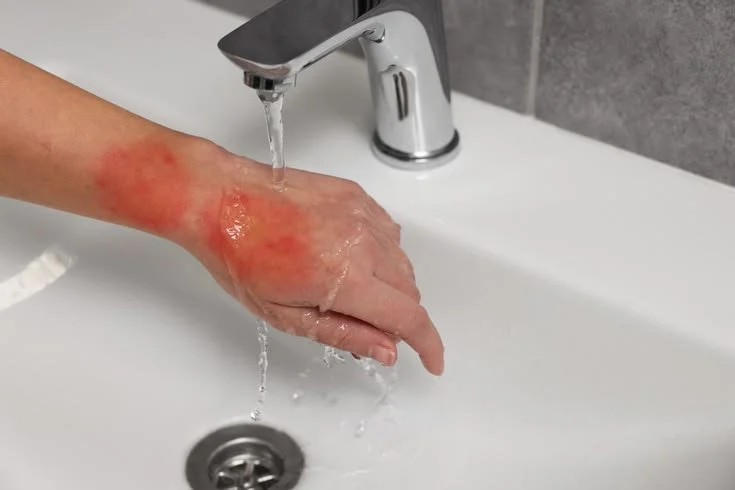
Illustrative photograph of cooling a burn. Use cool running water for 20 minutes and keep the rest of the body warm.
What should I do straight away after a kitchen burn?
Cool the burn under cool running water for 20 minutes.
Remove rings, watches and clothing near the burn, unless stuck to the skin.
Cover loosely with cling film or a clean plastic bag, without wrapping it tight.
Never use ice, butter, toothpaste, creams or oils.
Large, deep, chemical or electrical burns, or burns on the face, need A&E.
What is the right first aid for a burn?
The NHS advice on burns and scalds sets out the steps that make the biggest difference.
Get away from the source of heat.
Cool the burn under cool or lukewarm running water for 20 minutes. If there is no tap, use cool bottled water or a wet towel.
Keep the rest of the person warm, especially a child or an older person.
Remove jewellery and clothing near the burn, but leave anything stuck to the skin.
Once cooled, lay cling film loosely over the burn.
Take paracetamol or ibuprofen for pain, if suitable for you.
Cooling for the full 20 minutes reduces pain, swelling and scarring, and it still helps up to 3 hours after the burn.
What should I never put on a burn?
Ice and iced water can damage the skin further. Butter, oils, toothpaste and creams hold heat in and raise the risk of infection. Do not use sticky plasters or fluffy dressings, which stick to the wound, and do not burst blisters.
Contact the team to arrange a GP assessment.
When does a burn need A&E?
Call 999 or go to A&E if a burn is large or deep, if the skin looks white, brown or charred, or if it is on the face, genitals or bottom. Burns caused by a chemical or electricity always need hospital care, as do burns in someone who has breathed in smoke. Do not drive yourself.
When should a doctor see a burn?
See a doctor if a burn blisters on the hands, feet or over a joint, if it is larger than a small coin and blistered, or if you are not sure how deep it is. A burn in a baby, a young child, a pregnant woman, an older person or someone with diabetes should also be checked.
See a doctor promptly if a burn becomes more painful, red, swollen or smelly, oozes, or does not start to heal within a few days, or if you develop a temperature. These can be signs of infection, which our guide to cellulitis explains.
What happens at my appointment?
An appointment at The Online GP by The Wellness starts with the burn, and ends with a plan for healing well.
Contact the team to arrange an appropriate appointment, with a description of how the burn happened.
The doctor reviews the injury, symptoms and healing progress. A physical examination may be necessary.
The assessment can identify whether wound care, prescription treatment or specialist assessment is needed. Any dressing procedure and its availability must be confirmed rather than assumed.
The next steps depend on the injury. Emergency care is not replaced by a private GP appointment.
How much does a private GP appointment for a burn cost in London?
A same-day appointment in person at The Online GP by The Wellness costs £220. A video appointment costs £150, and a telephone consultation costs £59.
Book a GP appointment on WhatsApp.
How can the appearance of a burn be misleading?
The part of the skin that hurts most is not necessarily the most deeply injured. A white, brown or charred area needs urgent hospital assessment, even when it seems less painful than the surrounding redness. Loss of pain is not a sign that a severe burn has recovered. A hot pan, steam and a spilled drink can each damage the skin differently, and a photograph does not reliably show the full depth of that damage.
A clinician considers how the burn happened, how long the heat was in contact with the skin, the area affected and the examination together. This is why a small-looking injury over an important area can need more attention than its size suggests. A burn that crosses a joint can affect comfortable movement. A burn around a finger or limb can become tight as swelling develops. Seek prompt medical assessment rather than applying a tight bandage or waiting for an online appointment.
How should cooling fit around getting medical help?
Start cooling immediately, but do not delay an emergency call to finish the 20 minutes first. If the injury is severe, someone can call 999 while cooling continues. The British Red Cross advises continuing cooling while waiting for the ambulance. Following the call handler's instructions is more useful than trying to decide the severity alone.
Direct gentle running water at the injured area rather than putting the whole person into a cold bath. Keeping the rest of the body warm matters, particularly for children and older adults. The South West Burns Clinical Network specifically warns against cooling a child's whole body in a cold bath. Cover uninjured areas with clothing or a blanket, keeping fabric away from the burn itself.
If several minutes have passed before water becomes available, cooling can still help when started within three hours. That window is not a reason to wait. A phone timer can make it easier to complete the full cooling period without guessing how long it has been. Use cool water, not ice, and avoid adding products in an attempt to make the water work better.
What is cling film for, and when should it come off?
Cling film is a temporary first-aid covering after cooling. Laid loosely over the area, it protects the surface without sticking to the wound. It is not a treatment for the burn and is not intended to replace assessment or a suitable dressing when one is needed. Do not wind it around a finger, arm or leg. Swelling under a circular covering can create pressure.
The South West Burns Clinical Network also advises against applying cling film to the face or wrapping it around joints. Facial burns need emergency assessment. A clean plastic bag can be a temporary covering for a burned hand after cooling, as described by the British Red Cross, but it must not be tied tightly. The aim is a loose, clean covering while appropriate care is arranged.
A clinician can advise whether a minor burn should be left uncovered or protected with a non-sticky dressing, and when that dressing needs changing. Household adhesive plasters and fluffy materials can stick to damaged skin. If a dressing has become stuck, painful or soaked through, obtain advice rather than pulling it off or adding several tight layers over it.
How does a burn change over the following days?
Cooling deals with the immediate injury. The next part of care is making sure the wound is progressing rather than becoming more painful or infected. Note the date of the injury, where it is and whether the affected area is becoming less uncomfortable. A clinician may want to know whether swelling, discharge, smell or pain has increased since the previous day, not only how the burn looks at that moment.
Most small burns heal in about two weeks, but that is a guide rather than a guarantee. A wound that remains open at two weeks needs medical review. Review should happen earlier if pain is increasing, the area is hot or swollen, there is pus or an unpleasant smell, or you feel feverish or unwell. Do not wait until the two-week point when those changes are present.
Keep any planned dressing or wound-review appointment even if the pain has improved. Healing at the surface and the need for further care are not always the same thing. If you are unsure whether the skin has closed or whether a dressing should remain in place, the clinician looking after the wound can give advice for that particular burn.
When is cream helpful rather than harmful?
There are two different situations. Immediately after a burn, creams, oils and butter should not be applied. They do not replace cooling and can complicate assessment and cleaning. Later, when the skin is healing and becomes dry or itchy, an emollient ointment may be helpful. The NHS distinguishes this later skin care from the first-aid advice not to put products on a fresh burn.
A pharmacist or the clinician reviewing the wound can advise on a suitable product and when to begin. Avoid rubbing a cream into an open or blistered area without advice. If a product causes more stinging, redness or a rash, stop using it and seek guidance. A prescription is not automatically needed for a small burn, and antibiotics are not a substitute for the right assessment and wound care.
What can a private GP assessment add after first aid?
For an injury that does not need emergency care, a GP assessment can bring the history, healing progress, medicines and relevant health conditions into one plan. This is particularly useful when the burn is not settling as expected, there is uncertainty about infection or you need advice on returning to work. The appointment route should match the injury rather than simply being whichever consultation is easiest to arrange.
A telephone or video discussion can help assess symptoms and the next step, but it cannot reliably measure burn depth or provide a physical examination. If an examination, dressing procedure or specialist burns service is needed, the care plan should reflect that. Contact the team to confirm the appropriate appointment and available arrangements; a WhatsApp enquiry or photograph is not a diagnosis or a promise of a particular procedure. Serious burns must go through urgent care, not wait for a reply from the clinic.
Frequently asked questions
How long should I run a burn under water?
For 20 minutes, using cool or lukewarm running water. It still helps if you start within 3 hours of the burn.
Should I pop a burn blister?
No. The blister protects the skin underneath as it heals. If it is large or in an awkward place, a doctor can advise.
How long does a small burn take to heal?
Most minor burns heal within about 2 weeks. A burn that is not healing after a few days, or looks infected, should be seen by a doctor.
Can I put cream on a burn?
Not straight away. Cool the burn and cover it with cling film. Once healing, an emollient can help if the skin becomes dry and itchy.
Can I send a photograph instead of being examined?
A clear photograph can support a consultation, but it cannot reliably establish how deep a burn is, how circulation is affected or whether the wound needs specialist treatment. It should never delay cooling, emergency treatment or an examination advised by a clinician. If the injury needs a close physical assessment, an online image is not a replacement.
What if I am unsure whether the burn is serious?
Use NHS 111 for advice rather than guessing. Call 111 for a child under five. The British Red Cross advises medical advice whenever a baby or child has been burned. For the emergency features described above, call 999 or go to A&E. Cooling can continue while someone else arranges that help.
How to reach us
WhatsApp, +44 7961 280835,
Email,
team@thewellnesslondon.com