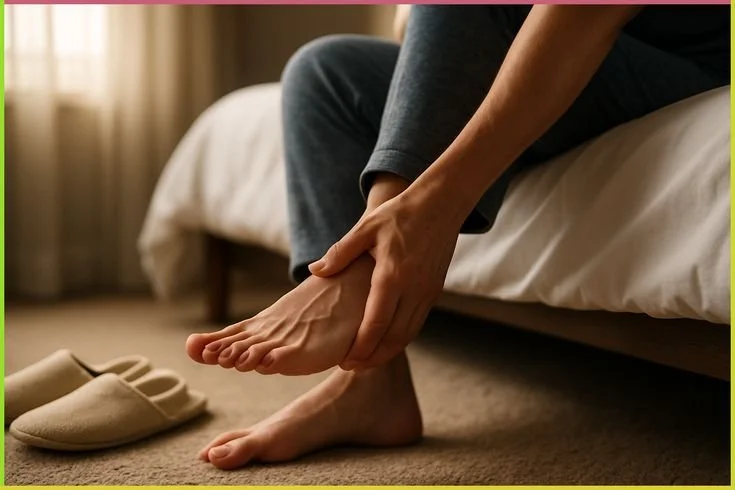
New difficulty lifting the foot needs assessment of the underlying cause. Illustrative photograph, not a diagnosis of foot drop or an image of treatment.
A foot that catches on the carpet, slaps against the ground or needs an unusually high step can indicate foot drop. The term describes difficulty lifting the front of the foot and toes. It is a symptom, not a diagnosis, and the cause can lie in a nerve in the leg, the lower back or, less commonly, elsewhere in the nervous system.
New weakness deserves clinical assessment rather than being treated as a simple ankle strain. The urgency depends on how it started and which other symptoms are present. Sudden weakness with possible stroke symptoms needs 999. Weakness with particular bladder, bowel or saddle-area symptoms can indicate a spinal emergency. Neither should wait for a routine private appointment or an online enquiry.
Which symptoms mean calling 999?
The NHS advises calling 999 if a stroke is suspected, including when symptoms have stopped after occurring within the last 24 hours. Facial drooping, difficulty lifting an arm and speech changes are the familiar FAST signs. Other possible features include weakness or numbness down one side, sight changes, confusion, dizziness or a severe headache.
A suddenly weak foot accompanied by these symptoms should not be attributed to footwear, a trapped nerve or a recent workout without emergency assessment. Stroke can occur at any age. Do not drive yourself to A&E, and do not wait to see whether the foot improves overnight if the overall pattern suggests a stroke.
The useful distinction is between recognising a warning pattern and diagnosing its cause at home. Foot drop alone does not prove a stroke, but an apparently local problem should not distract from new changes elsewhere in the body. Emergency services can assess the appropriate route when a stroke is suspected.
When can the lower back be an emergency?
Nerves in the lower spinal canal help control the legs, bladder, bowel and sexual function. Compression of this group of nerves can cause cauda equina syndrome. It is uncommon but serious. New foot or leg weakness alongside changes in these functions needs urgent medical assessment, especially when back or leg symptoms are worsening.
The NHS advises calling 999 or going to A&E for back pain with numbness around the bottom or genitals, inability to pass urine, loss of feeling in one or both legs, or loss of control over urine or stool. Back pain after a serious accident also needs emergency care. Do not drive yourself to A&E.
New changes in sexual feeling or function and altered sensation around the buttocks, inner thighs or saddle area are also important to report. Do not wait for complete incontinence before seeking help. An earlier reassuring examination or scan does not rule out a new problem that develops later.
What if the foot is newly weak without those warning signs?
Difficulty lifting the front of the foot and toes is a reason to see a GP. For a new or worsening problem, seek prompt clinical advice rather than joining a routine exercise programme first. The clinician can establish the onset, whether the weakness is progressing and whether an urgent specialist route is needed.
A Scottish NHS referral pathway distinguishes new foot drop after trauma, foot drop with nerve-root symptoms from the back and acute weakness affecting both feet. These presentations can require urgent orthopaedic or neurological assessment. The pathway is local professional guidance, not a promise about a particular London service or referral timescale.
The wider lesson is that the route depends on the pattern. A routine musculoskeletal appointment is not automatically the right first destination for undiagnosed new weakness. If symptoms are progressing or new neurological symptoms appear while waiting, seek further urgent advice instead of assuming the original plan still applies.
What does foot drop actually look like?
The muscles that lift the front of the foot help the toes clear the ground during walking. When they are weak, the toes may drag or catch. Some people lift the knee higher to compensate. Others notice the foot landing with a slap because they cannot control the movement normally.
The NHS notes that foot drop usually affects one foot and can change the way a person walks. Symptoms can be noticed during ordinary daily activities, not only sport. Difficulty moving the foot should be distinguished from avoiding movement because the ankle hurts, although pain and weakness can coexist.
A description of what has changed is often more useful than trying to label the nerve involved. The clinician needs to know when walking first felt different, whether the problem is constant, and whether there is pain, numbness or weakness elsewhere. Do not repeatedly test the foot on stairs if it is catching or giving way.
How can a nerve in the leg cause it?
The NHS describes injury to a nerve controlling the muscles that lift the foot as the most common cause. The peroneal nerve is one possible site of difficulty. A local nerve problem can occur with an injury or with pressure related to prolonged leg crossing, kneeling or squatting.
Foot drop can also follow a long period of limited movement, such as a hospital stay, or occur after hip or knee replacement surgery. These associations provide useful context, but they do not establish the diagnosis without examination. New weakness after a procedure or injury should be reported to the treating team promptly.
The practical aim is to identify why the nerve is not working normally and whether an ongoing cause needs attention. Simply changing posture may not be an adequate response to established weakness. Avoiding prolonged pressure can be sensible while seeking advice, but it should not become a reason to delay assessment.
Could a slipped disc be responsible?
A slipped or herniated disc is a bulge of tissue between the bones of the spine. When it affects a nerve, it can cause pain, altered sensation or weakness. The NHS includes a slipped disc among the possible causes of foot drop and describes leg pain, tingling and muscle weakness as possible disc-related symptoms.
Back pain is not always the dominant complaint. The assessment considers pain through the buttock or leg, changes in sensation and the pattern of weakness. A scan showing disc changes also needs interpretation, because not every disc bulge causes symptoms. The examination and the images should answer the same clinical question.
Worsening muscle weakness can change the need for specialist assessment even when pain is being managed. A general recommendation to keep active for back pain should not be read as advice to push through a newly weak foot. Bladder, bowel or saddle symptoms require the emergency route described above.
How does peripheral neuropathy differ?
Peripheral neuropathy means damage to nerves outside the brain and spinal cord. It can affect sensation, muscle control or automatic functions. The NHS describes numbness, tingling, burning pain, loss of balance and weakness in the feet among the possible symptoms. The pattern depends on which nerves are affected.
Diabetes is a common cause, but it is not the only explanation. Physical nerve injury, some medicines, alcohol and other conditions can also contribute. Neuropathy may involve a single nerve or a wider group of nerves. This is one reason the clinician examines more than the ankle alone.
Someone with diabetes should not assume new weakness is simply an expected part of their condition. Assessment can identify another cause or a change that needs treatment. Reduced sensation also makes foot injuries harder to notice, so a cut, ulcer or skin problem that is not healing deserves review.
What happens during the assessment?
A GP will examine the leg and foot and look at the way the person walks. The history includes how suddenly the problem started, previous injuries or surgery, back or leg pain, areas of altered sensation and changes elsewhere in the body. Current medicines and relevant conditions help place the symptoms in context.
The examination helps distinguish a local nerve problem from a possible spinal or more widespread neurological cause. Strength, sensation and movement are considered together. The result may be a working explanation, but further assessment can be needed if the site or cause is not clear.
It is useful to bring existing reports and a medicine list rather than arranging a new scan independently before the clinical question is established. Any previous diagnosis should be reviewed against the current symptoms. A change in walking or power deserves attention even if an earlier appointment focused mainly on pain.
Which investigations might be considered?
The NHS notes that specialist assessment may include imaging such as an X-ray, ultrasound or CT scan, depending on the suspected cause. MRI may be relevant when the lower back is being investigated. The right test depends on where the problem is thought to be, not on a general ranking of which scan is most detailed.
Blood tests may also be selected when a metabolic or wider nerve problem is suspected. The Scottish NHS pathway includes tests relating to glucose, vitamin levels, thyroid function and other possible contributors. That is a professional list for clinical selection, not a recommendation that everyone purchase a large panel.
An investigation should have a clear purpose and a plan for interpreting the result. A blood test does not replace examination of a newly weak limb, and a normal result from one type of test does not exclude every cause. Further specialist input may be more useful than repeating unrelated tests.
What treatment can help walking?
Treatment depends on the cause and how long the weakness has been present. Physiotherapy may help maintain movement and improve muscle function where possible. A brace, splint or shoe insert can support the foot in a safer position. These supports need to fit the individual problem rather than being chosen solely from an online description.
The NHS also describes electrical stimulation devices for selected people, particularly after stroke or with multiple sclerosis. That does not mean every person with foot drop is suitable. The decision depends on the cause, the remaining nerve and muscle function and a specialist assessment of likely benefit.
For permanent loss of movement, surgery may sometimes be considered. Options can involve joints or nerves, depending on the problem. A support device and treatment of the underlying cause can be part of the same plan. Improving safety while walking does not have to wait for a prediction about complete recovery.
Can foot drop recover?
Some cases improve on their own or with treatment, while others can be permanent. The NHS makes clear that the outlook varies. The cause, duration and degree of nerve or muscle difficulty all affect the discussion. No reliable recovery date follows from the symptom label alone.
A treatment review should separate different goals. Better toe clearance, fewer trips, reduced pain and improved strength are related but different outcomes. A brace can improve walking without proving that the nerve has recovered. Likewise, pain improvement does not necessarily mean foot control has returned to normal.
Progress and new symptoms should be reviewed rather than assumed. If power worsens, another area becomes weak or bladder, bowel or saddle symptoms appear, seek further assessment. Repeated reassurance based on an old diagnosis is not an adequate response to a new change in function.
How can falls be reduced while waiting?
Foot drop increases the risk of tripping and falling. The NHS recommends supportive, well-fitting shoes, clear floors and removing hazards such as loose rugs or cables. Good lighting and handrails on stairs can help. A walking aid may be appropriate if advised or needed for safer movement.
Daily arrangements should reflect the actual weakness. A route that was easy last week may now involve a step or uneven surface that catches the toes. Take extra care with stairs and do not rely on a painful or weak foot to recover balance during demanding exercise.
These measures support safety; they do not treat every cause. A new foot drop still needs assessment even if footwear makes walking easier. If driving or work tasks require reliable control of the affected foot, discuss safety with the clinician rather than assuming a temporary improvement makes those tasks safe.
Arranging an assessment with The Online GP
For a non-emergency concern about difficulty lifting the foot, The Online GP by The Wellness can receive an enquiry about the appropriate assessment route. Describe when the weakness started, whether it is progressing, and any back pain, injury, numbness or symptoms elsewhere. Existing reports can help provide context.
An enquiry does not replace urgent assessment or confirm a particular investigation, specialist appointment or treatment. The right next step may be an urgent hospital route rather than a routine clinic visit. A careful consultation should clarify that distinction and support the next appropriate action, without promising that every cause can be treated in the same setting.
Discuss non-emergency foot weakness and the appropriate assessment route with The Wellness
Frequently asked questions
Is foot drop a diagnosis?
No. It describes difficulty lifting the front of the foot and toes. A nerve in the leg, a spinal problem or another neurological condition may be responsible. Assessment aims to identify the cause rather than treating every weak foot as the same condition.
Should I wait for pain before getting help?
No. Foot drop can be painless. Difficulty lifting the foot or a change such as toe dragging needs clinical assessment even without pain. Seek urgent help for new or progressing weakness, and use 999 for suspected stroke or the emergency spinal warning signs described above.
Does a weak foot always mean a slipped disc?
No. A disc affecting a nerve is one possible cause, but local nerve injury, pressure and wider nerve conditions are alternatives. Symptoms and examination guide whether the lower back needs investigation. A scan finding alone should not be treated as the whole explanation.
Can I exercise my way out of it?
Exercises can form part of a treatment plan, but they should follow assessment of new weakness. The right programme depends on the cause and the risk of falling. Do not push through a dragging foot or use strenuous exercise instead of seeking advice about a new neurological symptom.
Will a splint cure the nerve problem?
A splint or brace can hold the foot in a position that improves walking and reduces catching. It does not by itself establish that the nerve has recovered. Support for walking and treatment of the underlying cause are separate parts of care.
When should I use emergency care instead of a routine enquiry?
Call 999 for suspected stroke, even if symptoms have stopped. Back pain with saddle numbness, inability to pass urine, loss of leg feeling or loss of bladder or bowel control needs 999 or A&E under NHS guidance. Do not wait for a routine appointment when these warning signs are present.
Sources
NHS Right Decisions, Drop foot referral guidance
North Bristol NHS Trust, Cauda equina syndrome emergency assessment information